
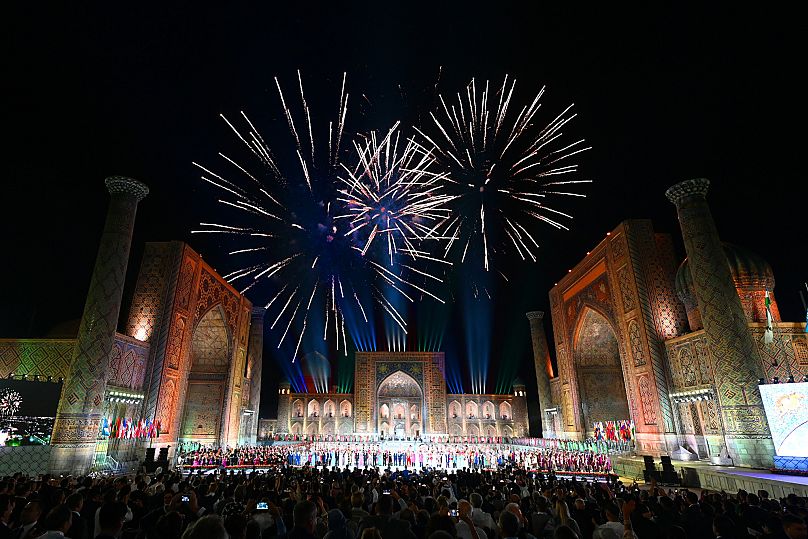
On Thursday and Friday, Samarkand will play host to the inaugural high-level gathering between the European Union and the Central Asian nations.
This significant occurrence will usher in a fresh era in the relationship between these areas, signaling a shift towards an entirely new dimension of collaborative efforts among multiple parties.
Arranging this dialogue underscores the European Union's significant interest in fostering collaboration and its dedication to enhancing relationships with the Central Asian countries.
As European Council President António Costa remarked before the gathering, "We find ourselves in a chaotic and fragmented world, with the sole viable solution for the EU being to reinforce alliances aimed at achieving peace and prosperity."
"In a multipolar world, more proactive and focused engagement is essential. This inaugural EU-Central Asia summit will help reinforce our pledges to collectively secure peace, stability, and sustainable development," Costa stated.
Of equal importance was the declaration made by European Commission Deputy Chief Margaritis Schinas.
Schinas stated that the EU is giving particular importance to Central Asia against the backdrop of ongoing geopolitical instability.
In an era where global instability and insecurity are on the rise, Central Asia stands out as a zone of constructive developments. Our partnership with this area is not merely a fleeting occurrence; rather, we are committed to a sustained outlook for the future.
When discussing the enhanced collaboration between Brussels and Central Asia, analysts observe that over recent years, this partnership has developed into one that is steady, systematic, and advantageous for all parties involved.
Foundational legal and institutional framework for partnerships
Since the emergence of new independent states in Central Asia, the European Union has begun working to establish bilateral partnership ties with them. From 1991, the development of the EU strategy in Central Asia has gone through several important stages, which are conditioned by changes in the international relations system, the dynamics of European integration, and the role of Central Asia in world politics -- including energy resources, transit, human resources and geostrategic location.
The first large-scale cooperation program was the "Technical Assistance to the Commonwealth of Independent States" (TACIS, 1991-2006), which provided support to countries in the region in conducting political and economic reforms, transitioning to a market economy, and strengthening the rule of law. In total, over 3,000 projects were implemented under this initiative, totaling more than €7 billion.
A key achievement of TACIS was the conclusion of Partnership and Cooperation Agreements with Central Asian countries.
It is important to note that in the 1990s, the EU policy in Central Asia had a pronounced resource-oriented character. The EU viewed the region primarily as a source of energy resources, actively promoting transport and logistics projects (TRACECA) aimed at ensuring hydrocarbon supplies to Europe.
After 2001, the focus shifted towards security cooperation. The main priorities became combating terrorism and drug trafficking from Afghanistan. During this period, the Border Management Program (BOMCA) and the Drug Precursor Control Program (CADAP) in Central Asia were also launched.
The next important stage was the adoption of the first EU Strategy for Central Asia in 2007 (a separate program - the European Neighborhood and Partnership Instrument - was developed for the Eastern European CIS states).
This stage was marked by the beginning of perceiving Central Asia as a single region. A mechanism for annual meetings at the level of foreign ministers of the EU and Central Asian countries was also created.
Within the framework of the strategy, various projects were implemented - from regional, environmental, and energy initiatives to projects in the areas of security, human rights, and the rule of law.
However, according to experts, the first EU strategy did not meet expectations, as it was comprehensive and contained numerous shortcomings, which prevented it from generating sufficient interest among Central Asian countries.
Moreover, the document was repeatedly modified to increase its effectiveness, but the implemented initiatives and joint programs remained limited. Although the strategy was initially designed for ten years, its replacement with a new program occurred only twelve years later.
Central Asia in a new dimension
The neighborhood and regional partnership policy implemented by the Republic of Uzbekistan under the leadership of President Shavkat Mirziyoyev has made a significant contribution to rethinking the European Union's Central Asian strategy.
Due to collaborative endeavors, an entirely fresh political climate has emerged in Central Asia. Throughout several years, numerous issues that had persisted for decades have been addressed. As a consequence, the area is evolving into a hub of reciprocal collaboration and enduring growth.
To put it differently, Central Asia is not merely seen as a bridge connecting East and West anymore; instead, it has emerged as an autonomous player in global politics.
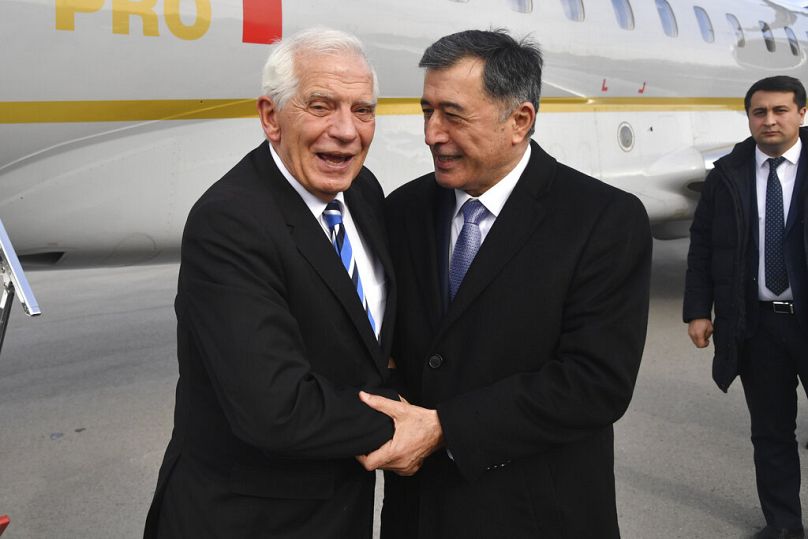
The comment made by former European Commissioner for Foreign Affairs and Security Policy Josep Borrell at the EU-Central Asia Transportation Investors Forum in January 2024 serves as an illustration of this point.
"At one point Central Asia felt like a remote wilderness, but now you find yourself right at the heart of all the action," he remarked back then.
This shift in perspective regarding the area's significance is mirrored in the European Union’s strategic outlook. When introducing the updated Strategy for Central Asia in 2019, the EU focused primarily on fostering regional collaboration, expanding upon earlier initiatives.
This method can be seen in the execution of all ten sectors of collaboration within the updated strategy, which encompasses human rights, democratization, education, economic growth, energy, transportation, environmental protection, water resource management, cross-cultural communication, and regional stability.
These concepts are illustrated by the introduction of fresh terminology within the strategic document, including “connectivity” (enhancing cross-border links between regions), “inclusivity” (welcoming participation from all outside entities), and “sustainability” (capacity for mitigating potential dangers and challenges). All these align perfectly with what the nations of Central Asia aim to achieve.
Today, the region's states, taking into account internal needs and the emerging geopolitical situation in the world, are interested in attracting European investments, technologies, and innovations to address priority tasks of ensuring stability and sustainable development in areas such as economy, industry, energy, transport, human capital and climate change.
Multifaceted cooperation
The European Union has markedly enhanced its engagement with Central Asian nations, paying closer attention to their interests across various domains including political ties, security matters, commercial activities, investment opportunities, and cultural exchanges.
In particular, the regulatory and legal framework for EU-Central Asia interaction is being strengthened. Brussels in recent years has been building relationships with the five Central Asian states through Comprehensive Partnership and Cooperation Agreements (CPCA).
To date, Kazakhstan and Kyrgyzstan have already signed such agreements with the EU. In March 2024, Turkmenistan signed a protocol to the CPCA, while Tajikistan and Uzbekistan are finalizing the document's signing.
A further boost to collaboration came from the Joint Roadmap for Strengthening Relations between the EU and Central Asia, which was approved in October 2023. This roadmap encompasses vital sectors such as cross-border political discussions, increased trade and economic connections, energy advancement, building a sustainable carbon-free economy, and tackling shared security challenges.
The EU and Central Asian nations continue to engage in vigorous political discussions at both top-tier and senior governmental levels. Leadership summits took place in October 2022 in Astana and in June 2023 in Bishkek, where participants examined potential collaborative initiatives and reaffirmed their dedication to enhancing the robustness of their multifaceted alliance.
Additionally, a series of ministerial meetings took place, the latest of which took place on 27 March 2024 in Ashgabat. The meeting discussed preparation for the upcoming EU-Central Asia summit in Samarkand, as well as a wide range of issues, including regional implications of the current geopolitical situation, development of transport and digital connectivity, cooperation in energy, water resources, trade, education, and science.
Strengthening political dialogue opens new opportunities for expanding trade and economic ties and developing industrial cooperation.
The European Union remains the largest investor in Central Asia, providing over 40% of direct foreign investments over the past ten years (over €100 billion). Interaction covers key sectors, including pharmaceuticals, construction, energy, and agriculture.
An area of focus within their strategic partnerships has been the extraction and refinement of minerals. Given the growing emphasis on diversifying sources for crucial materials, nations from Central Asia have become more prominent players in the international mineral market.
Agreements reached with Kazakhstan in 2022 and Uzbekistan in 2024 enable European firms to enhance their collaboration with these Central Asian nations in advanced technology sectors.
Adopting the "Global Gateway" approach within the transportation and logistics sector has become increasingly significant. The Central Asia area is evolving into a crucial hub for Eurasian trade routes, with the Trans-Caspian International Transport Corridor holding a distinctive position.
One of the key initiatives for enhancing the region’s logistical capabilities is the construction of the China-Kyrgyzstan-Uzbekistan railway project, which holds particular significance among various infrastructural developments.
The outcomes from the inaugural investment and transportation forum between Central Asian and European Union nations, which took place in Brussels in January 2024, injected fresh momentum into cooperative efforts. At this gathering, it was disclosed that €10 billion would be allocated towards upgrading the Trans-Caspian International Transportation Corridor, linking Asia with Europe.
A significant area of collaboration between the EU and Central Asia involves integrating the region digitally into the global economy. This year, in March, during an official trip through the region by European Union Commissioner for International Partnerships Jozef Siekera, the TEI Digital Connectivity initiative was initiated. The program aims at improving satellite communication systems, increasing broadband internet accessibility, fostering technological innovation, and bolstering cyber security measures. Such efforts help create a more equitable and sustainable economic framework while narrowing the gap in digital technology access.
A crucial element of the engagement between the European Union and Central Asia continues to be addressing climate change and moving towards sustainable development. Significant efforts in this domain encompass the "SECCA" initiative under the "Team Europe" framework, the Water and Energy Program known as CAWEP, along with the "Green Central Asia" program.
Their goals include efficient management of water resources, creating eco-friendly energy solutions, and adjusting to climate change impacts.
Key focuses for tomorrow
In general, the present condition of ties between Central Asian nations and the European Union shows a shared interest in enhancing collaboration. For this area, the EU serves as more than just a significant trading, economic, and investment ally; it is also pivotal for standards in sustainable growth, digital change, and ecological initiatives.
It is evident that a comprehensive dialogue between the parties is becoming a vital tool in shaping a new framework for interaction. Deepening this dialogue enables both adaptation to global challenges and the development of more targeted and substantive cooperation in priority areas—ranging from energy and digitalization to security and infrastructure development.
In light of the above, it seems appropriate to consider several proposals that could contribute to the formation of a long-term partnership.
For the European Union, this involves keeping up a robust dedication to backing initiatives focused on enhancing regional collaboration and establishing adaptable approaches for interacting with Central Asian nations. This enables the EU to tailor its strategies and policies according to current circumstances.
The European Union ought to concentrate on critical sectors for collaboration like transportation, energy, climate change mitigation, and fostering human capital, since these elements are crucial for driving the area's sustained economic expansion over time.
Lastly, Brussels needs to strengthen the structural and regulatory basis of the partnership. This includes completing the signing of Enhanced Partnership and Cooperation Agreements with every country in the area, easing their entry into the GSP+ program, boosting the presence of Central Asian nations within EU institutions, and aiding them in establishing offices in the region.
Conversely, Central Asia ought to demonstrate a firm dedication to meeting all commitments under the EU cooperation agreements. This would enhance the area’s reputation as a dependable strategic ally and sustain efforts toward increasing intra-regional collaboration and positive interactions with outside entities. By doing so, Central Asia can reinforce its position as a hub for mutual partnerships and collective economic growth.
It should also facilitate the execution of the EU’s Central Asia Strategy, showing the region's dedication to enhancing collaboration with Brussels and allowing the EU to more effectively strategize its initiatives and establish key priorities.
Additionally, the area needs to launch cultural and humanitarian initiatives aimed at fostering public diplomacy and enhancing the favorable perception of Central Asian nations within the EU, as well as reciprocally.
Consequently, the forthcoming EU – Central Asia summit in Samarkand offers a distinctive chance that will surely provide fresh momentum for the advancement of comprehensive collaboration between these areas.
This will elevate relations to a qualitatively new level, characterized not only by the expansion of economic ties but also by enhanced coordination in strategically important areas, laying the foundation for a sustainable partnership.
Bakhtiyor Mustafayev serves as the Deputy Director of the Institute for Strategic and Regional Studies under the President of Uzbekistan.
EmoticonEmoticon