
The Trump administration imposed sanctions on six prominent Chinese and Hong Kong officials for their involvement in "transnational repression" and for undermining the autonomy of Hong Kong.
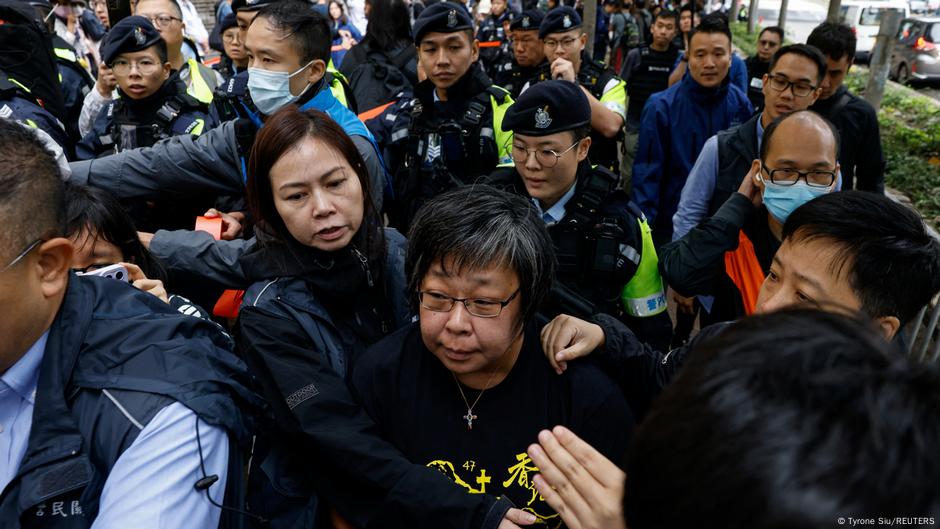
As one of its initial significant actions in international affairs, the Trump administration has imposed sanctions Regarding six high-ranking officials from China and Hong Kong for their involvement in what it describes as "transnational repression'' and eroding Hong Kong's autonomy.
The US State Department announced on Monday that the individuals had used the controversial national security law — legislation which gives the Hong Kong government more power to crush dissent — to target pro-democracy activists, including Americans.
According to the statement, Beijing Hong Kong officials faced accusations that they extended the law’s scope beyond their jurisdiction to “intimidate, silence, and harass” 19 overseas activists — including one U.S. citizen and four individuals residing in the United States.
The sanctions target Dong Jingwei, a previous senior figure within China’s civil intelligence service, and currently leads Beijing’s National Security Office in Hong Kong.
Previously, Dong was known as China's chief counterintelligence official, tasked with tracking foreign spies and dissidents.
The other officials targeted are Sonny Au, Dick Wong, Margaret Chiu, Raymond Siu — Hong Kong's police commissioner — and Paul Lam, the city's secretary for justice.
Politicians and advocates welcome the action.
The sanctions, issued under a 2020 executive order first signed by US President Donald Trump during his first term, freezes any assets the individuals may have in the United States and bar American entities from conducting financial transactions with them.
Officials in Washington characterized the action as a reaction to the ongoing decline in liberties in Hong Kong, notably after the implementation of the national security legislation in 2020.
The law, which allows for life imprisonment for acts like subversion or collusion with foreign forces, was imposed after massive pro-democracy protests in 2019. While Chinese officials claim the law has restored order, Western governments — including the US — argue it has been used to imprison opposition figures, dismantle media outlets, and restrict civil society.
The sanctions were welcomed by advocacy groups, including Frances Hui of the Committee for Freedom in Hong Kong Foundation, who called the action "a critical step in addressing the worsening crackdown.'' She urged the US to extend accountability measures to include judicial actors complicit in silencing dissent.
So far, the Chinese embassy in Washington has not provided any comments. Nonetheless, Chinese officials have consistently maintained that the security legislation is crucial for maintaining national stability and sovereignty.
Edited by John Silk
Author: Shubhangi Derhgawen (AFP, Reuters)
EmoticonEmoticon