
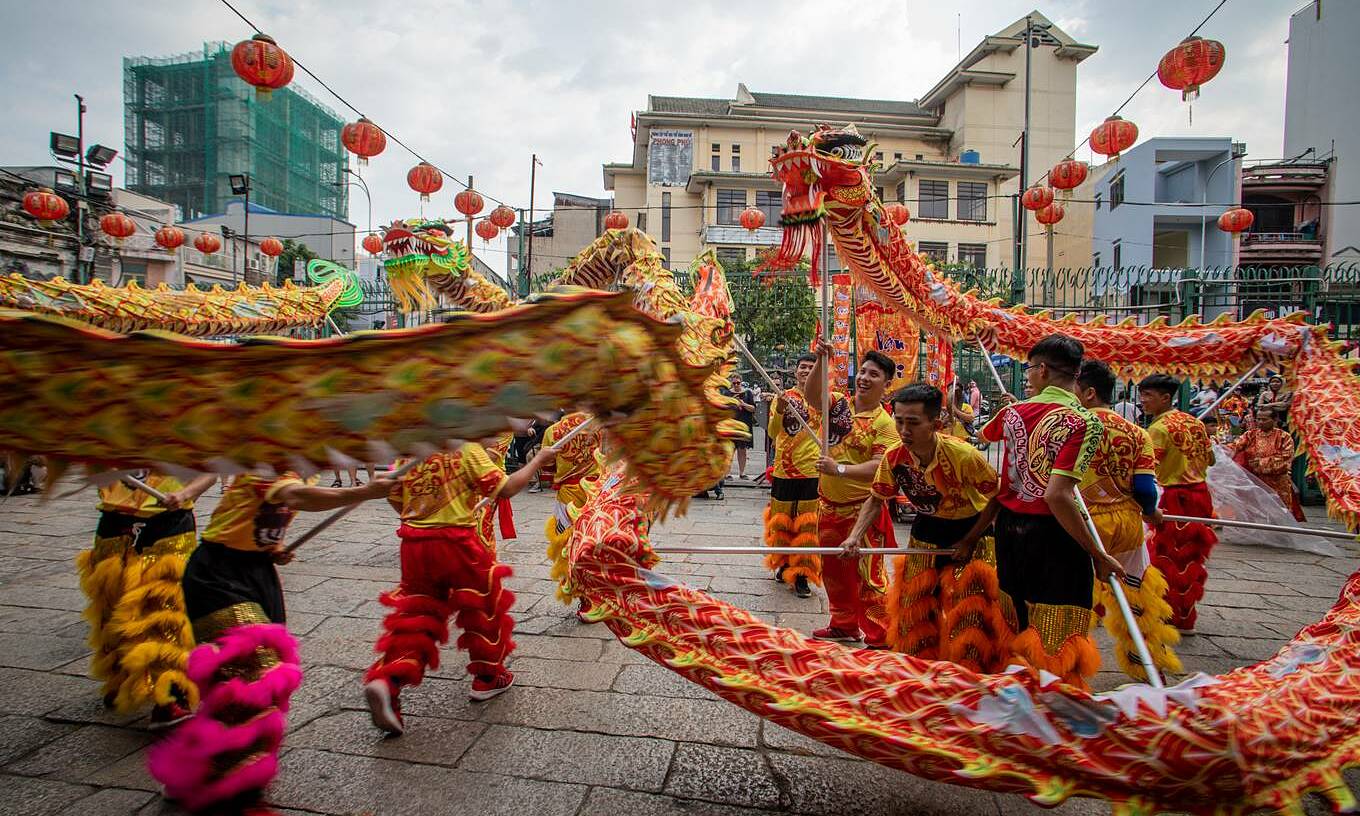
Explore Ho Chi Minh City, where historic sites, bustling markets, architectural wonders, and contemporary attractions blend together to create a dynamic and memorable journey.
1. War Remnants Museum
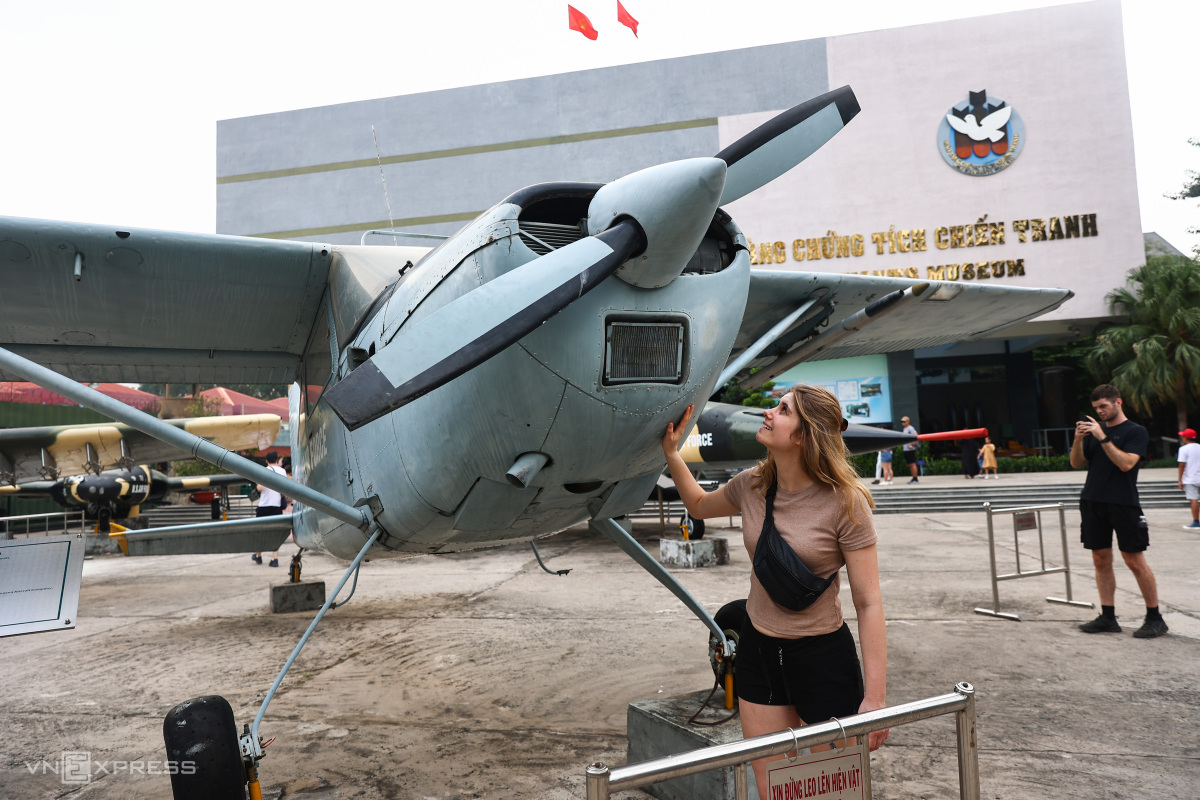
The War Remnants Museum provides a poignant look at Vietnam’s tumultuous past during the Vietnam War. It showcases photographs, exhibits, and military hardware that illustrate the conflict's effects on both Vietnam and its population.
|
|
A Belgian visitor examining an airplane at the War Remnants Museum in Ho Chi Minh City. Image courtesy of VnExpress/Quynh Tran |
The collection comprises 20,000 items such as weaponry, soldier’s possessions, propaganda posters, and wartime correspondence between soldiers and their family members. It also features photographs and documentaries that graphically illustrate American war crimes, encompassing mass killings, the deployment of chemicals like Agent Orange, and immense civilian suffering. These tragic occurrences still affect millions of Vietnamese people today with ongoing consequences such as bodily ailments, hereditary conditions, mental distress, and economic hurdles in post-war reconstruction efforts. In 2022, the Canadian tourism site The Travel Included the War Remnants Museum in the list of top 10 "ancient museums" across Asia.
The War Remnants Museum has consistently stood out as one of the premier draws for tourists not only in Ho Chi Minh City but throughout all of Vietnam, attracting approximately one million visitors each year.
The museum operates every day from 7:30 a.m. to 6:00 p.m., with an entry fee of VND40,000 (approximately US$1.60). Its location is at 28 Vo Van Tan Street in District 3.
2. The Saigon Notre-Dame Cathedral Basilica
|
|
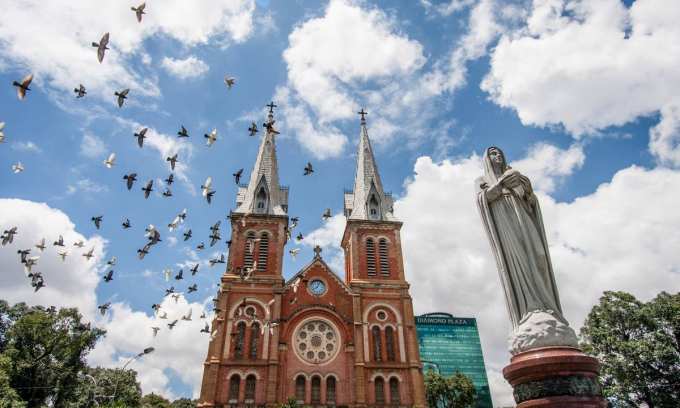
Pigeons fly over the Notre-Dame Cathedral Basilica in District 1, HCMC. Photo by VnExpress/Thanh Nguyen |
Situated in the center of the city at Cong Xa Paris Square in District 1, this French colonial-era cathedral was constructed from 1863 to 1880. Featuring a neo-Romanesque style, stunning stained-glass windows, and two prominent bell towers reaching 58 meters high, it serves as an impressive reminder of Ho Chi Minh City’s colonial past.
The cathedral's brick walls, brought in from Marseille, lend it a cozy and enduring look, whereas inside, one can find detailed engravings and an atmosphere of serenity. This site functions as a sanctuary for worshipers and photographers alike, providing guests with insight into the town’s historical and religious legacy.
Entry is free, and the church is open daily. It has been undergoing renovation since 2017, and the work is now expected to be finished only in 2027 due to delays caused by difficulties related to import of certain materials. Visitors can still enter the church, though some areas are restricted for safety reasons amid the construction.
3. Ben Thanh Market
|
|
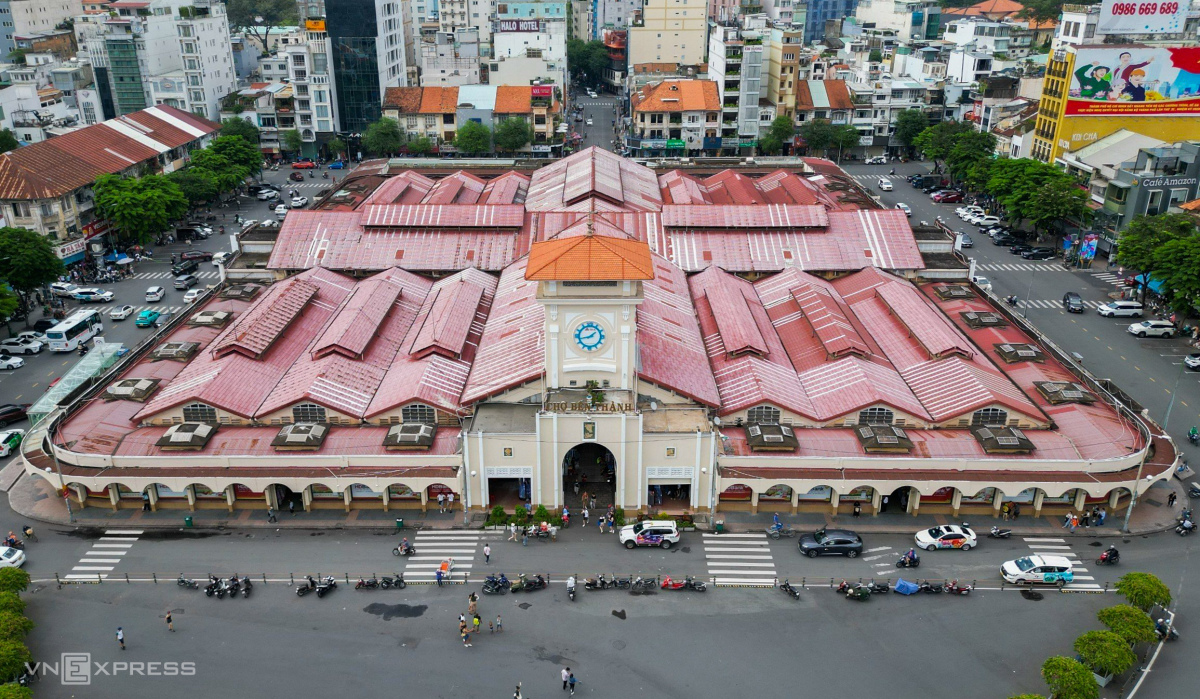
The view of Ben Thanh Market from above. Photo by VnExpress/Quynh Tran |
A bustling hub of activity, Ben Thanh Market is situated in District 1 and stands as one of the city's oldest and most iconic landmarks. Established in the early 20th century, it is a vibrant reflection of the city's culture in which locals and tourists alike can immerse themselves.
It is a perfect place to shop for local handicrafts, textiles, souvenirs, and a variety of fresh produce. The market is also a culinary haven, offering traditional Vietnamese dishes like pho, sizzling pancake banh xeo , and fresh spring rolls together with refreshing drinks like sugarcane juice and Vietnamese iced coffee. Just outside the market, a brand-new square provides a lively space for visitors to relax, while the nearby metro offers convenient access for travelers.
The area in front of Ben Thanh Market is being prepared for renovation, which is set to start before April 2025.
Ben Thanh Market is open daily from 6:00 a.m. to 6:00 p.m., with a lively night market operating until 10:00 p.m., offering a different atmosphere with street food vendors and outdoor stalls lining the nearby streets.
It is important to note that Ben Thanh Market is notorious for overcharging foreign tourists. A Japanese tourist was charged VND700,000 ($30) for three pairs of socks in 2023. The shopkeeper was prohibited from doing business for a week by the market management. So keep this in mind when you visit the place.
4. Reunification Palace

|
|
Visitors enjoying the sun at the Reunification Palace in HCMC. Photo by Vnexpress/Thanh Nguyen |
Also known as Independence Palace, this historic site at 135 Nam Ky Khoi Nghia Street, District 1, is a symbol of Vietnam's history and the end of the Vietnam War. Built in the 1960s, it served as the residence and workplace of the South Vietnamese president.
The palace gained prominence on April 30, 1975, when a North Vietnamese tank burst through its entrance, symbolizing the collapse of U.S.-supported Saigon and the unification of Vietnam. Nowadays, it functions as a museum where guests can explore its lavish chambers, hidden underground shelters, and strategic control centers that were pivotal during the conflict. This site serves as a potent testament to Vietnam’s endurance and metamorphosis.
Guests have the opportunity to tour the kept chambers like the presidential office, cabinet meeting room, and dining hall where formal gatherings, key decisions, and national functions took place. Below ground lie former control hubs from the era of the Vietnam War, providing insight into strategic planning during combat times. Various displays feature war relics, archival images, alongside important transportation means such as tanks and helicopters that were crucial in those battles.
The palace is accessible every day from 8:00 a.m. to 5:00 p.m. The ticket price is VND65,000 ($2.60).
5. Cu Chi Tunnels
|
|
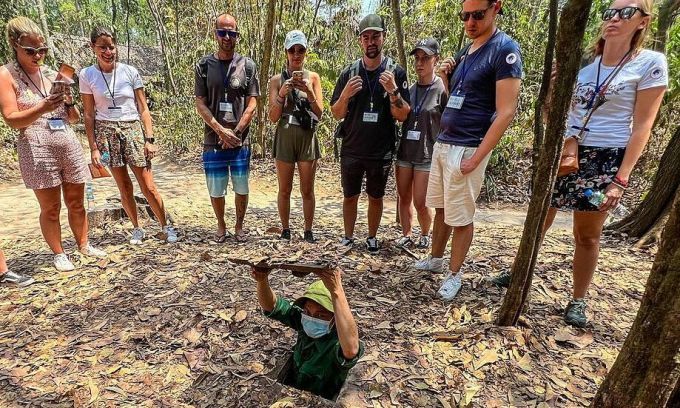
International visitors observe a tour guide demonstrating how to navigate the entrance of the Cu Chi Tunnels in Ho Chi Minh City. The image was shared by jwrach007 on Instagram. |
Located approximately 70 kilometers (43 miles) away from central Ho Chi Minh City, the Cu Chi Tunnels form a vast subterranean complex that was pivotal during the Vietnam War. Constructed and utilized by Vietnamese fighters starting in the late 1940s during the First Indochina War, these tunnels functioned not just as hideouts but also as vital conduits for supplies, residences, and tactical hubs for guerrilla combat.
Tourists have the opportunity to traverse parts of the tunnels, which were expanded from their initial narrow dimensions to allow visitors to understand the difficult circumstances endured by the soldiers. The site features historical objects from wartime, simulated booby traps, and engaging displays that explain the tactics and fortitude of the Vietnamese fighters. This location serves as an educational destination for individuals interested in gaining more insight into Vietnam’s past.
Daily tours are offered, with prices differing based on the operator, beginning around VND110,000 ($4.40) for admission.
6. Ho Chi Minh City Central Post Office
|
|
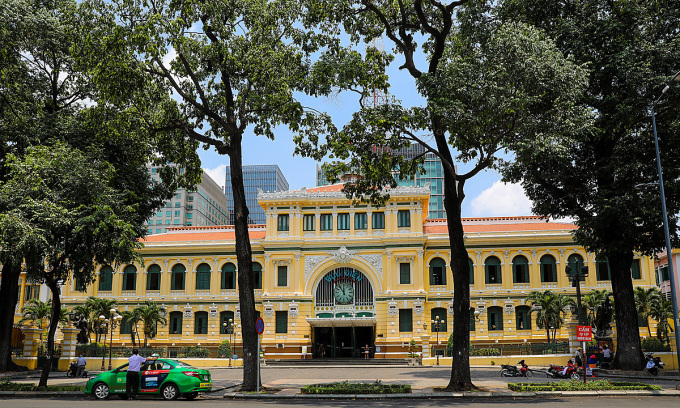
The front gate of Saigon Central Post Office. Photo by VnExpress/Quynh Tran |
The magnificent Central Post Office located at 2 Cong Xa Paris, District 1, was designed by Gustave Eiffel and constructed in 1891. It stands as an exemplary piece of French colonial architecture, featuring intricate ironwork and arched windows that blend elements from Gothic, Renaissance, and French styles. Adjacent to this iconic building is one of the city’s most frequented attractions. book street Nguyen Van Binh .
The structure still serves as an operational post office and attracts many tourists due to its stunningly maintained interior. Upon entering, one can admire a lofty ceiling held up by elaborate ironwork and old-fashioned phone stalls, enhancing its timeless appeal.
The post office is open daily from 8:00 a.m. to 5:00 p.m., and entry is free.
7. Tan Dinh Church
|
|
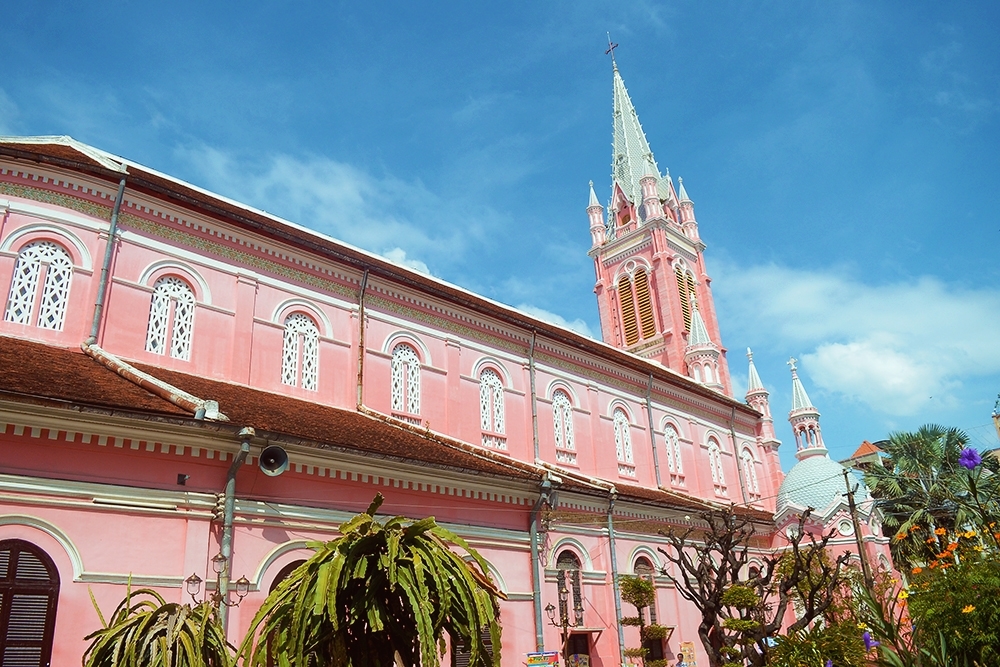
Side view of Tan Dinh Church in HCMC. Photo by VnExpress/Phong Vinh |
Known for its striking pastel facade, Tan Dinh Church, also known as The Pink Church, at 289 Hai Ba Trung Street, District 3, is another architectural gem from the French colonial era. Built in 1876, it is one of the oldest churches in HCMC and stands out for its unique Romanesque, Gothic, and Baroque influences.
The elaborate facade of the church, adorned with white accents and delicate designs, stands out strikingly against its vibrant pink color, turning it into a popular location for photos. Within, guests can marvel at the lofty arched ceilings, ornamental sanctuaries, and colored glass windows, enhancing both its allure and historic importance. Tan Dinh Church serves as more than just a religious site; it acts as a cultural monument embodying the city’s deep-rooted traditions.
The church operates every day.
8. Landmark 81
|
|
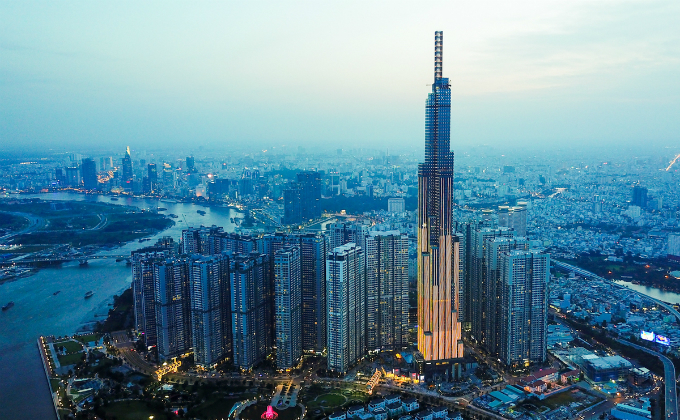
Landmark 81 in Ho Chi Minh City at nighttime. Photo by VnExpress/Quynh Tran |
Standing tall as Vietnam’s highest building, Landmark 81 in Binh Thanh District stands out as an emblem of contemporary sophistication and opulence, reaching a remarkable elevation of 461.2 meters (1,513 feet).
The viewing area on the top levels offers unobstructed 360-degree vistas of Ho Chi Minh City, particularly breathtaking at dusk and after dark.
Within the structure are upscale stores, fine dining eateries, a posh hotel, and cutting-edge recreational amenities such as an ice skating rink and a movie theater.
The viewing platform is accessible every day from 9:00 a.m. to 9:00 p.m., with entry priced at VND300,000 ($12) onwards. Within the same structure, you can find various amenities such as shops and eateries operating typically between 10:00 a.m. and 10:00 p.m.
9. Bui Vien Pedestrian Street
|
|
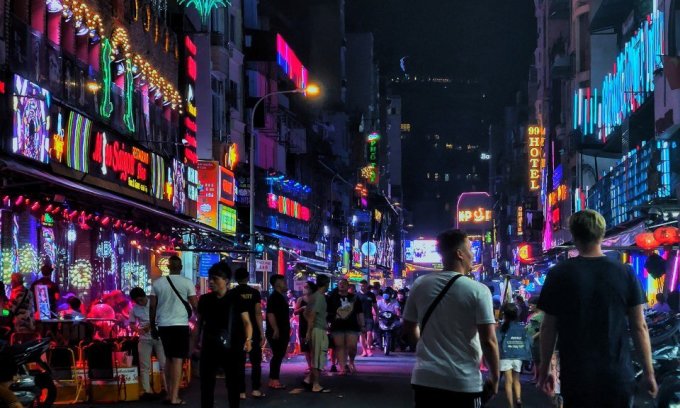
The Bui Vien pedestrian street in Ho Chi Minh City at nighttime. Photo by VnExpress/Bich Phuong. |
Bui Vien Walking Street in District 1 serves as the pulsating core of Ho Chi Minh City’s nighttime scene, attracting both residents and visitors alike. As a lively footpath exclusively for pedestrians, this thoroughfare transforms into a hub of activity during the evening hours, featuring crowded pubs, dance clubs, and various live musical acts, which together generate a spirited and ever-changing ambiance.
This location is renowned for its array of street food stalls that serve an extensive selection of tasty regional bites like banh mi, pho, broken rice com tam, and crispy fresh spring rolls—ideal for quelling midnight hunger pangs. If you seek dancing, refreshing beverages, or just want to experience the vibrant ambiance, Bui Vien Walking Street stands out as the premier spot for entertainment, cuisine, and thrill-seeking in Ho Chi Minh City.
As one might expect, the street becomes particularly vibrant during the evening hours.
10. Chinatown (Cho Lon)
|
|
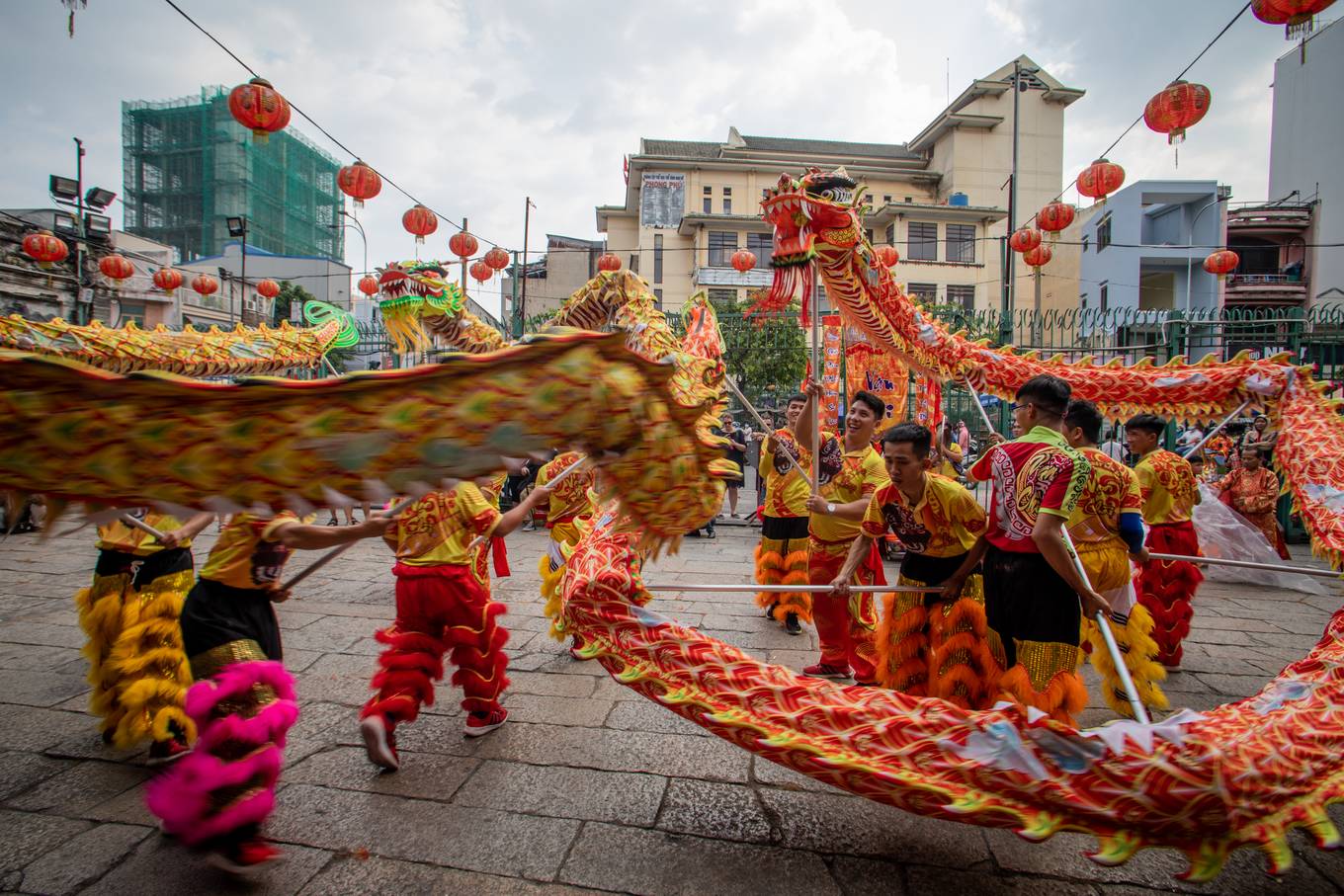
Chinatown of Saigon during the Tet holiday. Image captured by VnExpress/Thanh Nguyen |
Situated in District 5, Chinatown—also known as Cho Lon—is a dynamic neighborhood brimming with Chinese-Vietnamese heritage and history. This lively area features an array of traditional Chinese buildings alongside local markets and genuine dining spots serving up Chinese cuisine. It’s essential for visitors who wish to immerse themselves in this cultural amalgamation.
Tourists have the opportunity to visit historical sites such as the Thien Hau Temple, which honors the Chinese deity of the seas, and Binh Tay Market, a bustling bazaar offering an array of goods including spices, traditional medicines, fabrics, and keepsakes.
The winding lanes are bordered by stores peddling authentic Chinese products, and the scent of street cuisine permeates the atmosphere, providing an genuine experience of regional tastes and traditions.
Access to the majority of sites is complimentary, although certain temples might impose a nominal charge.
11. Thao Dien
|
|
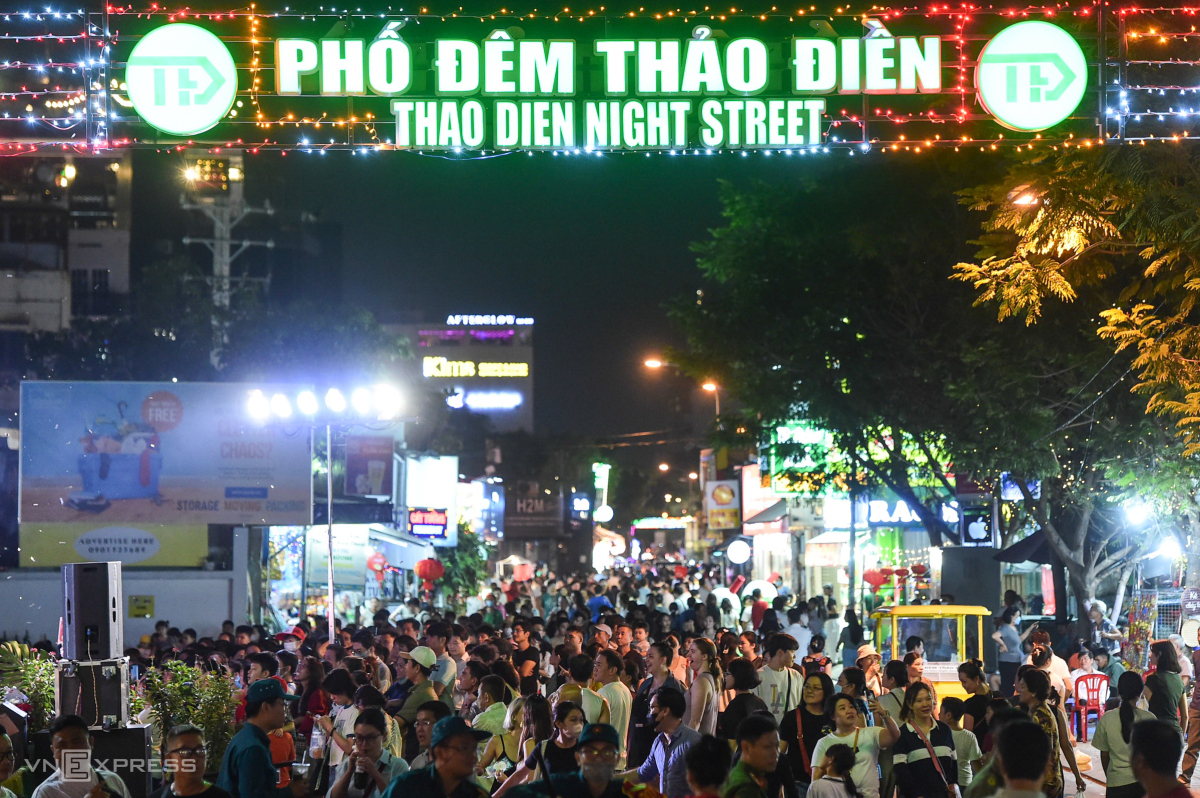
Thao Dien Night Street in Ho Chi Minh City. Image courtesy of VnExpress/Phong Anh |
Located in District 2, Thao Dien stands out as an elegant and fashionable district distinguished by its global atmosphere and varied expatriate population. It serves as a retreat for individuals who desire tranquility combined with sophistication, featuring numerous coffee shops, chic stores, and cutting-edge art galleries that enhance its appeal for relaxed discovery.
Thao Dien features riverside dining spots as well, allowing guests to savor tasty dishes while admiring breathtaking vistas of the Saigon River. This area is ideal for families due to its abundance of parks, play areas, and leisure zones, rendering it an excellent choice for both residents and travelers seeking a peaceful but lively ambiance removed from the urban chaos.
British magazine Time Out ranked Thao Dien 16th in a list of the world's 38 coolest neighborhoods in October 2024.
EmoticonEmoticon