
Air travelers within Europe might encounter new challenges when claiming compensation for delayed flights as the European Union initiates a reassessment of rules established in 2004.
However, the document has faced several political hurdles as both civil society groups and airlines have demanded that it be revised.
Currently, it is possible to obtain compensation of between €250 and €600 for delays of three hours or more.
However, ongoing discussions might lead to regulations that aren’t beneficial for consumers, as stated by the European Consumer Organisation (BEUC).
Steven Berger, a legal expert from BEUC, informed Euronews that the Commission suggested modifying the deadline for obtaining compensation. Instead of being limited to three hours, it could now extend up to five, nine, or even twelve hours based on the travel distance.
Concretely, what effects will this have? If the proposals under discussion are approved, 85% of consumers will lose their entitlement to compensation.
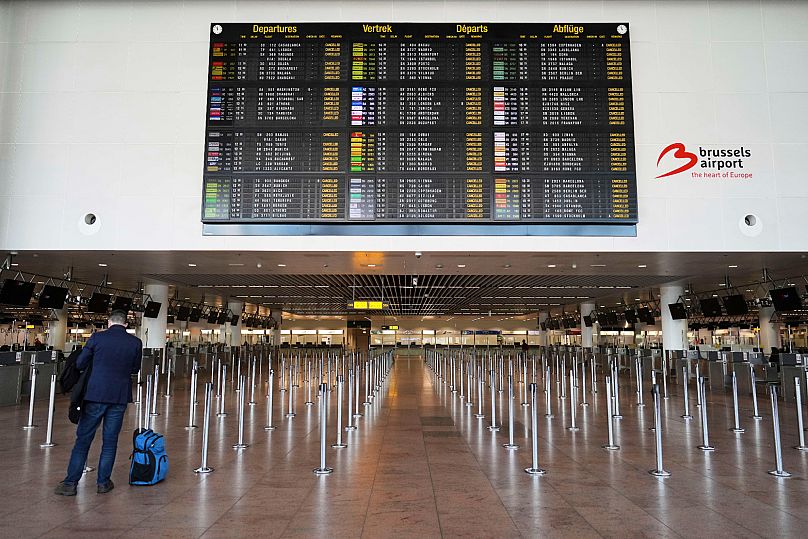
This rule covers all departures from EU airports irrespective of the airline’s national origin, as well as arrivals at EU airports when served by an EU-based carrier.
This rule doesn't cover flights to Europe run by airlines outside the EU, nor does it include non-EU flights that have a layover in an European country.
The regulation covers all Member States as well as Iceland, Norway and Switzerland.
Compensation is not payable in the event of "extraordinary circumstances", for example e. extreme weather conditions, air traffic control restrictions, strikes not involving airline staff and political instability.
BEUC is also critical of the timeframe envisaged for asserting passengers' rights.
"For now, whatever is being discussed...you would get just three months to seek compensation or ensure your rights are upheld if you've faced issues with the airline, which is quite inadequate," asserts Steven Berger.
Flexibility defended by the airlines
The talks currently taking place among the Member States are founded upon a proposition put forth by the European Commission back in 2013.
Once again, civil society believes that this text is outdated and no longer corresponds to the needs and requirements of today's passengers.
For airlines, however, this decade-old document still serves as a solid foundation for discussions.
The A4E (Airlines4Europe) organization, which represents companies responsible for 70% of Europe’s air travel, has penned a letter stating that “the European Commission’s proposal from 2013 aimed at finding common ground would provide airlines with the necessary adaptability to handle disruptions more efficiently. This approach supports maintaining flight schedules and prioritizes meeting travelers’ main objective: reaching their destinations swiftly.”
As stated by A4E, "existing laws are unclear, leading to confusion for travelers, air carriers, and judicial authorities."
Although compensation for delays and cancellations lies at the core of these challenges, consumer organizations also emphasize the necessity of reassessing the function of travel intermediaries.
These are websites for comparing, reserving, and purchasing flight tickets; however, they do not adhere to the regulations outlined in the 2004 document.
Poland, currently holding the rotating six-month EU presidency, has assumed control of the matter and aims to achieve significant advancements in the talks before June.
At present, discussions are being conducted at the technical level and have not yet escalated to the political stage.
EmoticonEmoticon